Indian Space Research Organization (ISRO) has played a key role in the development of our nation over the years. With its impressive space missions, ISRO has clearly put India on the map when it comes to space exploration. It is really breathtaking what we have achieved in a short span of 46 years. (ISRO was officially established in 1969)
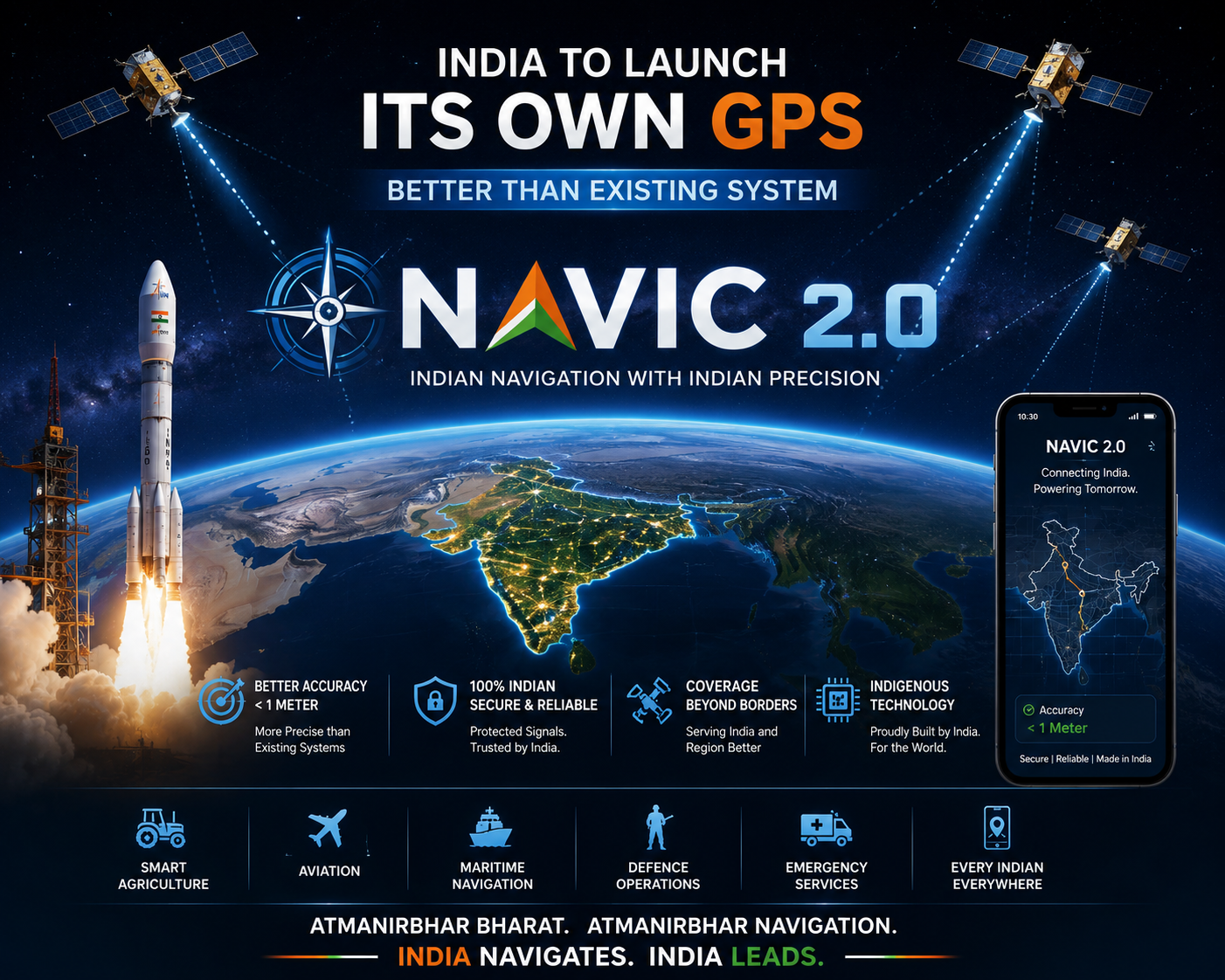
Now onto the news: ISRO has planned to launch India’s very own GPS system. It’s called Indian Regional Navigation Satellite System (IRNSS) and its main purpose is to provide better GPS connectivity in the remote regions of the nation, as well as in other parts. The area of coverage encompasses all of India and 1,500 kms around the national boundaries.
The IRNSS system is actually a constellation of seven satellites. Three will be deployed in geostationary orbits while remaining four are deployed in geosynchronous orbits. All of them will be identically configured. A geosynchronous orbit is one in which an object returns to the same position in the sky after a period of one day (approx. 23 hours, 56 minutes and 4 seconds).
The orbit is inclined and eccentric i.e. not circular. A geostationary orbit is a special case of a geosynchronous orbit which is a circular orbit with zero inclination, and directly above the equator. An object in such an orbit will seem stationary to a ground observer, like a star.
Why all the technicality? Because it is an important precursor to the following point: Communication satellites are generally placed in geostationary orbits so that the ground and satellite antennas don’t have to be moved during communication. Instead, given the nature of the orbit, the antennas can remain pointed to a single location in the sky.
Back to the IRNSS; the system will provide two kinds of services.
1. Standard Positioning Service (SPS) – The conventional GPS service, open to all users.
2. Restricted Service (RS) – Secured service only meant only for authorized personnel.
The IRNSS mission is a big step towards technology-independence and sure to bring advantages.
Source:http://gadgets.ndtv.com





0 Comments